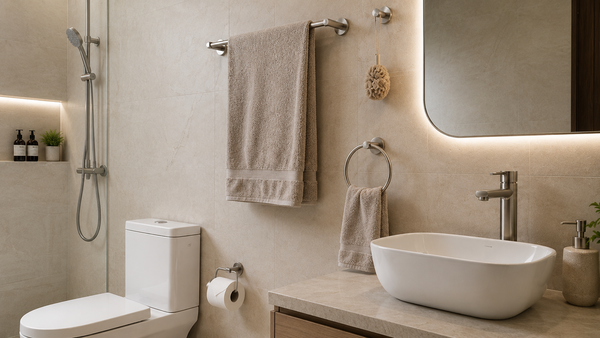
This guide is written for Malaysian homeowners, renovators, and renters who want a cleaner, more hygienic toilet without guesswork. We cover every bidet type sold here, what each one costs in Ringgit, how they compare on hygiene and running cost, and the install details such as water pressure, power points, toilet rough-in that decide which option will actually work in your bathroom.
Not sure which bidet suits your bathroom?
Browse the full range and compare sprays, seats, and smart units side by side. Explore Big Bath bidets →
Before we break down the types, the short video below from Many Bidets runs through the core questions every first-time buyer should ask like features, budget, bathroom compatibility, and installation.
Beginner's Guide to Buying a Bidet
Source video: Many Bidets on YouTube
1What is a bidet, and why do Malaysian homes use one?
Quick Answer: A bidet is a fixture that cleans you with a jet of water after using the toilet. In Malaysia the most common form is a handheld spray mounted beside the bowl. It is valued for hygiene, comfort, and cutting down toilet paper use — and it suits the local habit of washing rather than wiping.
A bidet replaces or supplements toilet paper with water. Instead of wiping dry, you rinse, which most people find cleaner and gentler. The idea is centuries old, but the format has changed: what used to be a separate ceramic basin is now usually a spray, a seat, or a built-in toilet function.
Malaysia has a strong wash-not-wipe culture, so a water spray next to the toilet is the norm rather than a novelty. That shapes what makes sense to buy here. A few reasons local homeowners add or upgrade a bidet:
- Better hygiene. Water cleans more thoroughly than paper alone, which matters in our hot, humid climate.
- Comfort and skin care. Gentler than dry wiping, helpful for sensitive skin, piles, pregnancy, and post-surgery recovery.
- Less toilet paper. A spray drops household paper use sharply, trimming a recurring cost.
- Accessibility. Electronic seats and smart toilets help elderly users and people with limited mobility stay independent.
If you are also planning the toilet itself, our toilet bowl types guide pairs naturally with this one, since the bidet you choose often depends on the bowl you have.
2What types of bidets can you buy in Malaysia?
Quick Answer: There are five common types in Malaysia: the handheld hand bidet, a complete bidet spray set, a non-electric bidet attachment, an electronic bidet seat, and a fully integrated smart bidet toilet. They run from a simple RM 30 sprayer to a smart toilet costing several thousand Ringgit.
Knowing the categories first makes every later decision easier. Here is the local ladder, from simplest to most advanced:
- Hand bidet (handheld spray). A trigger sprayer on a flexible hose, mounted on the wall. The default in most Malaysian homes — cheap, reliable, and you stay in control of the water.
- Bidet spray set. The same idea sold as a complete kit: sprayer, hose, holder, and sometimes a T-valve, in finishes like chrome or stainless steel.
- Non-electric bidet attachment. A slim panel that fits under your existing toilet seat and adds a wash nozzle worked by a dial. No electricity needed.
- Electronic bidet seat. Replaces your toilet seat with a powered unit offering warm water, adjustable spray, a heated seat, and a dryer. Needs a power point.
- Smart bidet toilet. A complete toilet with the bidet built in — auto open/close, sensor flush, warm wash and dry in one unit.
For the hands-on cleaning kit, the hand bidet collection covers trigger sprayers, shattaf sets, and replacement hoses for standard Malaysian connections. If you are leaning toward the top of the ladder, our smart toilet buying guide goes deeper on integrated units.
3Hand bidet vs bidet spray set: what is the difference?
Quick Answer: A hand bidet is just the sprayer head and hose. A bidet spray set is the complete package — sprayer, hose, wall holder, and connecting valve — ready to install. If you are replacing a worn sprayer, buy the hand bidet alone. If you are fitting one from scratch, buy the full set.
People often use the two terms interchangeably, but the practical difference is what comes in the box. Choosing well saves a second trip to the shop:
- Buy the hand bidet alone when your hose and holder are fine and only the sprayer head leaks or sticks.
- Buy the full spray set when there is no existing connection, you are renovating, or you want everything to match in one finish.
Material matters more than most buyers expect. A stainless steel or solid-brass sprayer with a quality hose lasts far longer than the cheapest plastic version, which tends to crack or drip within a year. If your current one is already leaking, our guide on how to fix a leaking bidet spray shows whether a repair or a full replacement is the smarter move.
4Are electronic bidet seats and smart bidets worth it?
Quick Answer: They are worth it if you want warm water, a heated seat, adjustable spray, and a dryer — and you have a power point near the toilet. An electronic bidet seat upgrades your current toilet for under RM 2,500. A smart bidet toilet replaces the whole fixture, costs more, but gives the most seamless experience.
This is where Malaysian buyers split. The hand spray does the basic job for very little money, so the question is whether the extra comfort justifies the price. The premium features that people actually use day to day:
- Warm water wash. The single most popular upgrade, especially in air-conditioned bathrooms.
- Adjustable nozzle. Separate rear-wash and front-wash settings with control over pressure and position.
- Heated seat and dryer. Comfort and a paper-free finish, useful for elderly or mobility-limited users.
- Self-cleaning nozzle. The nozzle rinses itself before and after each use, which keeps an electronic unit more hygienic than it sounds.
A bidet seat is the value pick because it reuses your existing toilet. A smart bidet toilet is the premium pick because everything is integrated and sensor-driven. If health features are your reason for upgrading, see how smart toilets support personal hygiene and comfort.
5How much does a bidet cost in Malaysia?
Quick Answer: Bidet prices in Malaysia span a wide range. A hand bidet runs RM 30–150, a complete spray set RM 80–250, a non-electric attachment RM 150–500, an electronic bidet seat RM 800–2,500, and an integrated smart bidet toilet RM 2,500 and up. Your budget largely decides which type you end up with.
The price gap between the simplest and the most advanced bidet is large, so it pays to know the bands before you shop. The figures below are typical retail ranges for each type across Malaysian bathroom retailers.
| Bidet type | Typical price (RM) | Relative cost |
|---|---|---|
| Hand bidet (sprayer + hose) | RM 30 – 150 | █ Lowest |
| Bidet spray set (full kit) | RM 80 – 250 | ██ Low |
| Non-electric attachment | RM 150 – 500 | ███ Mid |
| Electronic bidet seat | RM 800 – 2,500 | ████ High |
| Smart bidet toilet (integrated) | RM 2,500 – 10,000+ | █████ Highest |
Source: Aggregated from public listings across Malaysian bathroom retailers (Big Bath, manufacturer distributors, e-commerce platforms). Ranges are indicative; brand, finish, and features shift the final price.
The jump from a non-electric type to a powered one is the biggest single step in price, because that is where motors, heaters, and electronics enter. Everything below that line is affordable enough to fit almost any renovation budget — compare current models in the Big Bath bidet range.
Want a sprayer that lasts more than a year?
Our hand bidets use stainless steel heads and durable hoses built for Malaysian water connections. Shop hand bidets →
6Bidet vs toilet paper: does it really save money?
Quick Answer: Yes, over time. A cheap hand bidet costs little upfront and sharply cuts toilet paper use, so it usually pays for itself within months. The water it uses per wash is tiny compared with the paper it replaces. Powered bidets save paper too, but their higher price means the payback is about comfort, not pure savings.
The running-cost case is strongest at the bottom of the range. The illustrative comparison below models a typical household to show how the upfront price and ongoing savings stack up against paper-only use.
| Factor | Toilet paper only | Hand bidet + light paper |
|---|---|---|
| Upfront cost | RM 0 | RM 30 – 150 (one-off) |
| Paper used per person | High | Much lower (dry-off only) |
| Water per wash | None directly | Around half a litre |
| Cleanliness | Wipe only | Rinse, then pat dry |
| Typical payback | — | A few months on paper savings |
Illustrative scenario modeled on a typical Malaysian household. Actual savings vary with family size, paper brand, and usage habits. Not based on a formal survey.
The half-litre or so of water per wash is small next to the rolls of paper a bidet replaces. For a powered unit, treat the savings as a bonus — you are really paying for the warm water and comfort covered in the wider bidet range.
7Which bidet type is right for you? Feature comparison
Quick Answer: Match the type to your priorities. Choose a hand bidet or spray set for low cost and simple installation. Choose a non-electric attachment for an under-seat wash without wiring. Choose an electronic seat or smart toilet for warm water, a heated seat, and a dryer — provided you have a power point nearby.
Seeing the types side by side makes the trade-offs obvious. The matrix below lines up the five options against the features buyers ask about most.
| Type | Power needed | Warm water | Install effort | Price band |
|---|---|---|---|---|
| Hand bidet | No | No | Very easy (DIY) | Lowest |
| Bidet spray set | No | No | Easy (DIY) | Low |
| Non-electric attachment | No | Cold (some dual-temp) | Moderate (DIY) | Mid |
| Electronic bidet seat | Yes (power point) | Yes | Moderate (plug needed) | High |
| Smart bidet toilet | Yes (power point) | Yes | Plumber recommended | Highest |
Source: Big Bath product specifications and common Malaysian bathroom fitting practice.
Two questions settle most decisions: do you have a power point near the toilet, and do you want warm water? A "no" to both points you firmly toward a hand bidet or spray set. A "yes" to both opens up the seats and smart toilet options.
8Installing a bidet: can you DIY or do you need a plumber?
Quick Answer: A hand bidet, spray set, or non-electric attachment is a DIY job using a T-valve off the existing water supply — no plumber needed. An electronic bidet seat needs a nearby power point, so call an electrician if there is none. A smart bidet toilet replaces the whole fixture, so a plumber is recommended.
Most bidet installs are simpler than people fear. The water for nearly all of them is tapped from the same supply that feeds your toilet cistern. The table below shows what each type asks of you before you commit.
| Type | DIY-friendly? | Power point | Pro needed? |
|---|---|---|---|
| Hand bidet | Yes | Not needed | No |
| Bidet spray set | Yes | Not needed | No |
| Non-electric attachment | Yes (a bit fiddlier) | Not needed | No |
| Electronic bidet seat | Mostly | Required | Electrician if no socket |
| Smart bidet toilet | No | Required | Plumber recommended |
Source: Big Bath fitting guidance and common Malaysian bathroom practice
How to install a hand bidet in Malaysia

The whole job takes most people under thirty minutes with a spanner and some thread tape.
- Shut off the water. Close the angle valve feeding the toilet cistern, then flush to clear the line.
- Fit the T-valve. Disconnect the cistern hose, screw the T-valve (two-way diverter) onto the supply, and reconnect the cistern hose to one outlet.
- Connect the bidet hose. Attach the sprayer hose to the other outlet of the T-valve, using thread tape on the joints to prevent leaks.
- Mount the holder. Screw or stick the wall holder within easy reach of the toilet and seat the sprayer in it.
- Test for leaks. Reopen the valve, check every joint stays dry, and squeeze the trigger to confirm a steady spray.
Powered units add one requirement: a 13-amp power point near the toilet, kept clear of direct splashing. If you do not have one, an electrician should add it before fitting an electronic seat. For an integrated smart toilet, the rough-in distance and water connection are best handled by a plumber, much as you would when choosing the bowl itself in our toilet bowl selection guide.
9How do you choose the right bidet for your home?
Quick Answer: Work through four questions in order: your budget, whether you want warm water, whether you have a power point near the toilet, and your toilet's shape and rough-in. The answers narrow five types down to one or two, and from there you pick on finish, brand, and warranty.
You do not need to weigh every spec. A short decision path gets most Malaysian buyers to the right shortlist:
- Set your budget first. Under RM 250 keeps you in hand bidets and spray sets; RM 800–2,500 opens electronic seats; above that you reach smart toilets.
- Decide on warm water. If you want it, you need a powered type and a power point. If not, a non-electric option saves a lot of money.
- Check the power and space. Confirm a socket near the toilet for powered units, and measure your bowl shape and rough-in for seats and smart toilets.
- Then pick on finish and warranty. Choose the chrome or stainless finish you like, a trusted brand, and a clear warranty for any electronic parts.
When you are ready to compare actual models, the full Big Bath bidet collection lets you filter sprays, attachments, and integrated options in one place, and the wider bathroom range helps you match finishes across the room.
10Conclusion: start simple, upgrade when you are ready
Choosing a bidet in Malaysia comes down to honest answers about budget, comfort, and your bathroom's wiring and layout. The handheld spray remains the practical default for good reason — it is cheap, reliable, easy to fit, and cuts your paper use from day one. Most homes never need more than that.
When you want warm water, a heated seat, and hands-free comfort, the path up to an electronic seat or a full smart bidet toilet is clear, as long as you have a power point in place. Start where your needs are today, and you can always climb the ladder later without regret.
11Frequently Asked Questions
1. What is the difference between a bidet and a hand bidet?
A bidet is any fixture that cleans you with water — it can be a spray, a seat, or a built-in toilet function. A hand bidet is one specific type: the handheld sprayer on a hose that you control by trigger. In Malaysia, the hand bidet is the most common form, so people often use both words to mean the same thing.
2. Do you still need toilet paper if you have a bidet?
You use far less, but most people keep a little for drying off after a wash. Electronic seats and smart toilets with a built-in dryer can remove the need for paper entirely, while a hand bidet still pairs with a small amount of paper to pat dry.
3. Is a bidet spray hygienic?
Yes. Rinsing with water is generally cleaner than wiping with paper alone. With a handheld spray you control the water directly. On electronic units, the nozzle self-cleans before and after each use and is positioned to stay separate from the bowl, keeping it hygienic.
4. Can I install a bidet myself in Malaysia?
For a hand bidet, spray set, or non-electric attachment, yes — it connects to your existing water supply with a T-valve and takes under thirty minutes. An electronic bidet seat needs a power point nearby, and a smart bidet toilet replaces the whole fixture, so those are better handled by an electrician or plumber.
5. How much should I budget for a good bidet?
For a durable hand bidet or spray set, RM 80–250 buys a quality unit with metal parts that last. If you want warm water and comfort features, budget RM 800–2,500 for an electronic seat, or from RM 2,500 upward for an integrated smart bidet toilet.
Ready to upgrade to a cleaner, more hygienic toilet?
Message us on WhatsApp with your bathroom photos and budget — we will recommend the right bidet type, confirm your water and power connections, and arrange a showroom visit if you would like to try before you buy.
Browse bidets →